What Beauties!
Some of my favourite cars...Can there be any more beautiful sight!
Ferrari Enzo. Dream machine

The Alfa Romeo 8C. Gorgeous. Perfectly proportioned.

The Audi A5/S5. Sleek, muscular, understated performace


Some of my favourite cars...Can there be any more beautiful sight!
Ferrari Enzo. Dream machine
The Alfa Romeo 8C. Gorgeous. Perfectly proportioned.
The Audi A5/S5. Sleek, muscular, understated performace
The present indicative forms are made by removing the infinitive ending of the verb (-ar, -er or -ir) and replacing it with an ending that indicates who is performing the action of the verb.
To take one example, the infinitive form of the verb that means "to speak" is hablar. Its infinitive ending is -ar, leaving the stem of habl-. To say "I speak," add -o to the stem, forming hablo. To say "you speak" (singular informal), add -as to the stem, forming hablas.
The following chart shows the conjugations for each of the three infinitive types. The added endings for each verb are indicated in boldface.
This week Video GaGa has gone naughty :)
Here are some banned commercials...dont know the reasons behind their ban...but one thing for sure all of them are funny as hell
Statutory Warning : Be careful while you watch these videos...least you get banned too...
One of the most important things for beginners to remember about the present tense (beginners can worry later about what "indicative" means) is that English has more than one way to express what is expressed in this one Spanish verb form.
Therefore...Ella habla can be translated as -->She speaks
-->She is speaking
-->She does speak
Following are the different ways the simple present tense is used in Spanish. Note that in general the same ways are used in English.
To describe something that is happening right now: In English, these are often translated using the "-ing" form of the verb. Examples: Ella canta. "She is singing." Él come. "He is eating." Anda a la casa de su abuela. "He is walking to his grandmother's house." Estoy en casa. "I am at home."
To describe something happening in the near future: In both English and Spanish, the present and future tenses are often interchangeable for this purpose. Most often a time element is indicated in the sentence for this usage of the present. El tren sale a las ocho de la noche. "The train leaves at 8 p.m." La clase comienza temprano. "The class begins early." Vuelo el lunes. "I am flying on Monday."
To tell a general truth or describe an action that is repeated habitually or regularly: Such statements generally describe events or conditions happening in the past, present and future. Él toca el piano. "He plays the piano." Duermo mucho los sábados. I sleep much on Saturdays. María escribe bien. "María writes well." Mi hija es inteligente. "My daughter is intelligent."
In a narrative, to tell of the past: When telling a story or giving an account of an event, it is sometimes possible to provide the narrative in the present tense. Va al supermercado y pega un tiro al gerente. Entonces huye a México. "He goes to the supermarket and shoots the manager. Then he flees to Mexico."
In questions, to get instructions: In English, such a usage often uses the verb "do." ¿Pago ahora o después? "Do I pay now or later?" ¿Dónde cambio de ropa? "Where do I change clothes?"
Well after posting the Obama Icon lost week, I found this amazing site which lets you create similar icons featuring your pic!..check out Obamicon.Me

Here are some other icons from the site...


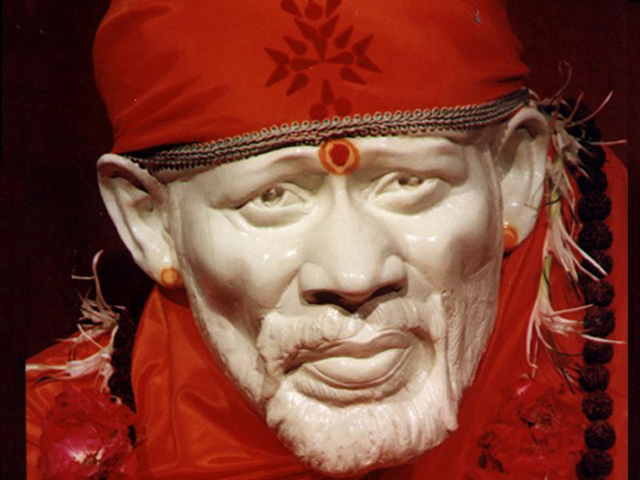
In the start of the 3rd Chapter Sai Baba tells us why we should read His Leelas. He wants his devotees to learn from his life. Sai Baba was the epitome of all that was good. In his day to day actions we see how we should be leading our lives. Hence it is not enough just to read Sai SatCharitra, but also to practice it's learnings in our life.
As described in the previous chapter, Sai Baba gave His complete assent to the writing of the Sat-Charita and said, "I fully agree with you regarding the writing of Sat Charita. You do your duty, don’t be afraid, steady your mind and have faith in My words. If My Leelas are written, the Avidya (nescience) will vanish and if they are attentively and devoutly listened to, the consciousness of the worldly existence will abate, and strong waves of devotion and love will rise up. If one dives deep into My Leelas, he will get precious jewels of knowledge."
Hearing this, author was pleased, and he at once became fearless and confident, and thought that the work was bound to be a success. Then turning to Shama (Madhavrao Deshpande) Sai Baba said.
"If a man utters My name with love, I shall fulfill all his wishes, increase his devotion. And if he sings earnestly of My life and My deeds, I shall protect him from front, back and from all sides. Those devotees, who are attached to Me, heart and soul, will naturally feel happiness, when they hear these stories. Believe Me that if anybody sings My Leelas, I will give him infinite joy and everlasting contentment. It is My special characteristic to free any person, who surrenders completely to Me, and who worships Me faithfully, and who remembers Me, and meditates on Me constantly. How can they be conscious of worldly objects and sensations, who utter My name, who worship Me, who think of My stories and My life and who thus always remember Me? I shall rescue My devotees from the jaws of Death. If My stories are listened to, all diseases will be got rid of. So, hear My stories with respect; and think and meditate on them, assimilate them. This is the way to happiness and contentment. The pride and egoism of My devotees will vanish, the mind of the hearers will be set at rest; and if it has wholehearted and complete faith, it will be one with Supreme Consciousness. The simple remembrance of My name as ‘Sai, Sai’ will do away with sins of speech and hearing".
Again think of Spanish verb conjugation in terms of Hindi Conjugation.Today we will see an overview of the different conjugations.
Back to TOP

